
How Kings helps keep identification clear and connected
Start with the pet and the records
We encourage an existing chip check and comparison with the paperwork you bring. This helps identify questions early, rather than assuming a pet needs another chip or discovering a mismatched number when a document is urgently required.
Know what registration still needs
We help you distinguish the physical microchip from the contact records associated with it. Ask which relevant records need updating and who completes each step, especially after adoption, a move or a change of telephone number.
Join up identification and travel planning
Tell us about an upcoming journey so identification can be considered alongside vaccination and document requirements. We help you understand which details need checking early, reducing the risk of building travel arrangements around an unresolved paperwork assumption.
What to expect
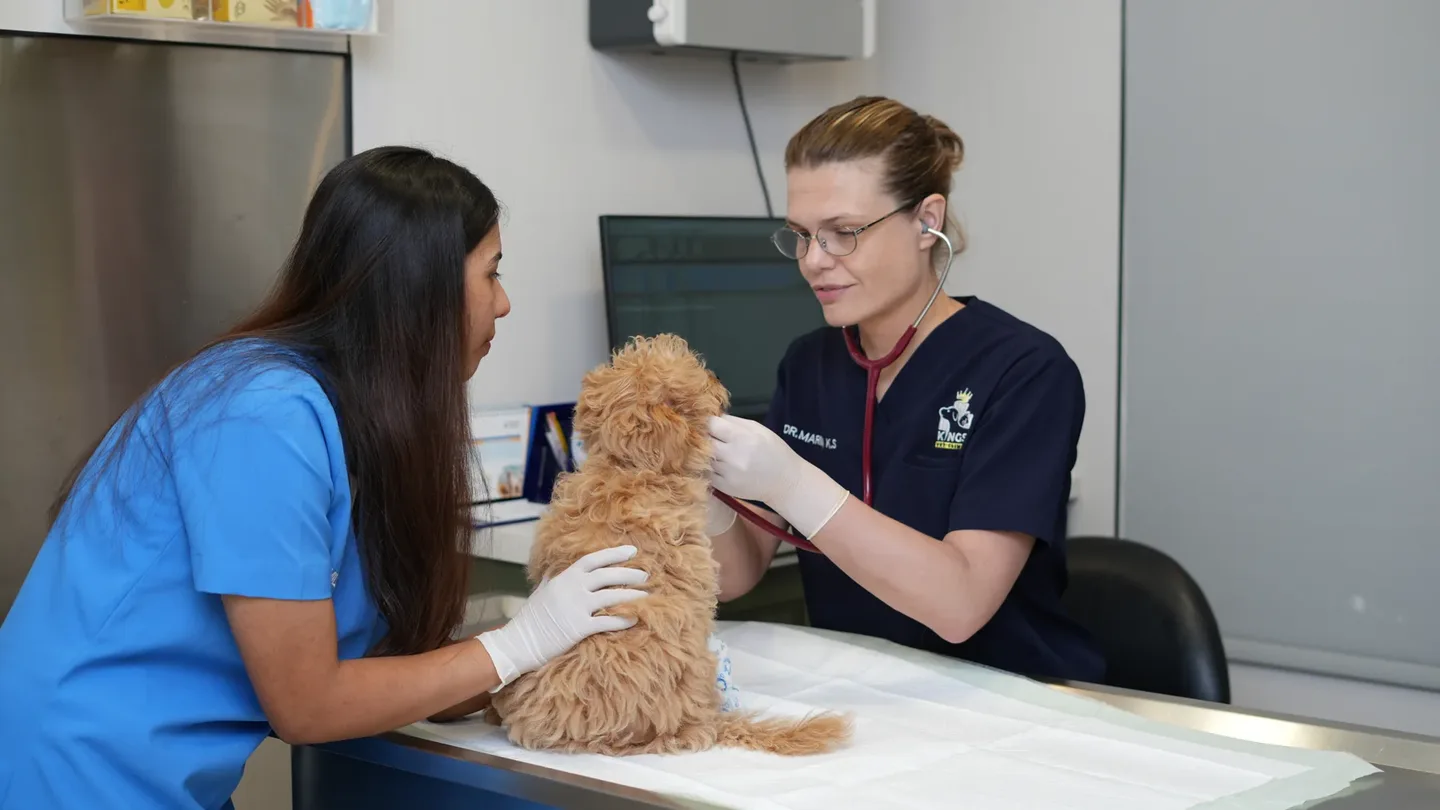
The team checks existing identification and explains the process and records involved. Ask how your contact details should be registered or updated.
Implantation and registration are different tasks
The chip provides an identifier; a usable contact record is a separate part of the process. Before leaving, ask which registry or local record applies, whether registration has been completed and which details you need to maintain yourself. Keep confirmation with the vaccination booklet. If you adopt a pet, do not assume that taking possession of the booklet automatically updates the registered contact. Ask how the relevant organisation handles a change of keeper or ownership.
An existing chip deserves a record check
If your pet is already chipped, bring the number from any previous clinic, adoption or travel documents. Ask for the scanned number to be compared with those records before another chip is considered. If the scanner and paperwork do not agree, the next step is clarification, not an improvised correction on a certificate. For an imported pet, mention the country of origin and any known chip details so identification and registration questions can be addressed together.
Use identification as part of a lost-pet plan
Keep a recent photograph, the microchip number and the relevant registration contact somewhere accessible outside your home. A collar tag with current contact details can complement a microchip; neither should be treated as a replacement for safe handling and secure doors or carriers. When you change telephone numbers or move, review every applicable contact record. You can also ask for the chip to be checked at a routine veterinary visit, especially before travel paperwork is prepared.
Before your appointment
Bring your pet’s documents, any existing microchip number and your current contact information. Mention planned travel or registration needs when booking.
After your visit
Keep a copy of the microchip number and update the relevant registration details when your contact information changes. A microchip is an identification device, not a live GPS tracker.
Costs & what to ask
Ask whether the quote covers scanning, implantation, documentation and any applicable registration charges.
Contact your chosen branch for current pricing and availability. Ask what is included in your estimate before confirming treatment.
Check the number across the documents
Accurate identification matters when records, registration or travel documents are linked to a pet. Bring existing paperwork so the team can compare the recorded microchip number with the scan. If a number is unreadable or a record differs, ask what needs resolving before further paperwork is issued rather than assuming the records can be used unchanged.
Keep identification useful over time
Ask which registration record needs your current contact information and who is responsible for updating it. Keep the microchip number with your pet’s vaccination and medical records, and mention an upcoming move or international journey. Travel preparation may also depend on when identification and vaccination were completed, so have the sequence checked early.
Your questions, answered
What does a microchip do, and is it a GPS tracker?
A pet microchip provides a unique identification number that can be read with a compatible scanner. It is not a live GPS tracker and cannot show your pet’s location on a map. Its value depends on connecting the identification number with correct contact information in the relevant registration records.
Ask the team to scan an existing chip before discussing implantation. Keep the number with your pet’s documents and check how your name, telephone and email should be registered. Update the relevant records when your contact details change so the identifier can help reconnect a found pet with you.
What should I bring to a microchipping appointment?
Bring your pet’s existing documents, any known microchip number and your current contact details. If your pet has been adopted, ask which registration information has already been completed and what needs to be transferred or updated.
Mention travel, boarding or registration plans when booking because these can involve separate documentation or specifications. Ask whether the fee includes scanning, implantation if needed, paperwork and applicable registration charges. Do not assume a chip appointment by itself completes every requirement for travel or local registration; confirm the specific steps with the team.
Can you check a microchip or help after my details change?
Contact reception to arrange a scan or an enquiry about your pet’s identification record. The scan can establish the number that is present; updating the owner’s contact information is a separate step with the relevant registry or record holder.
Have your pet documents and the correct current phone number and email ready. Ask the team which organisation holds the record and what evidence is needed for a change of ownership. Keep a copy of any confirmation. A readable chip is most helpful when the records linked to it are accurate and current.
If I adopt a chipped pet, are my details updated automatically?
Not necessarily. Ask the relevant registry or authority how a transfer is recorded and keep confirmation. The number on a booklet does not by itself prove that the database contains your current contact details.
Can a collar tag still help a microchipped pet?
Yes. A visible tag and a registered microchip serve complementary identification roles. Keep the contact information current and ask a vet to check an existing chip rather than assuming it needs replacing.
Appointment information updated 29 October 2026. Your treating veterinarian will provide advice specific to your pet.